Interviews by
James DesChamps
Outlander Publishing
Jason Strutz
James DesChamps: Hi Jason, thank you for taking your time to chat with me on comics! So introduce yourself.
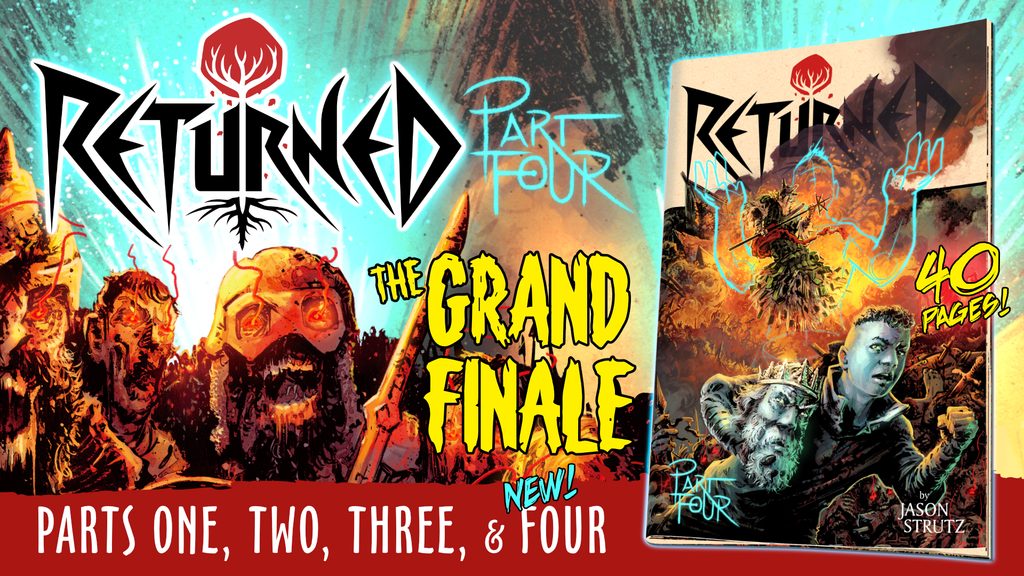
Jason Strutz: Hi, my name is Jason Strutz. I am a comic artist and writer in Grand rapids Michigan and I currently working on a book called Returned, it’s a medieval horror family drama.
J: What are some of your other interests and hobbies?
Jason: I like to go see music, it could be metal stuff, it could be Weird Al, could be just about anything. I like to read books, of course read comics, and do art. Usually that takes up enough time that I don’t have a whole lot of time for other stuff.
J: Yes on the heavy metal scene! So how long have you been creating? And what brought you into it?
Jason: I’ve been doing art pretty much my whole life I’m 45 now so let’s say 43 years. And then comments and that type of art probably about 15 years working with different writers and publishers from various small presses. Of also been doing graphic design, and RPG illustrations.
J: Very cool, do you have a list of RPG material you’ve worked on already?
Jason: I’ve worked with some small companies, my biggest client there is called 2C gaming. For about a year I was doing full time art and illustration for them. Checkmate studios and a few other small publishers but I really enjoyed just painting monsters!
J: What/who were your influences?
My first comic exposure I was 11 or 12 and I started picking up the X-Men run starting with the Jim Lee stuff and Mark Bagley on Spider-Man. Since then I have looked more to graphic novels and contain stories and my biggest influences right now are Tyler Crook doing Harrow County. He’s a big influence. I really like his cartoon style and the textures he gets from watercolors and stuff which is similar to what I do on my book.
J: Do you work Full time on your art? Another job as well?
Jason: So I do work full-time on my art, I don’t always want to give the impression that I’m making all the money, and my wife has a good job that helps pay the bills. I help with the cooking and cleaning and all that fun stuff. Well I do spend all of my time on the art I don’t imagine that I’m bringing in enough money to live.
J: How have you branched out and gotten your work out there in this highly competitive comic world?
Jason: Well especially with this project I’m working on now Returned, I’m releasing it as a webcomic so really anybody can find it and read it and get that exposure to my art and storytelling. From there, doing Kickstarters for each part of the book as I finish it. It’s a bit of a mindset shift of I’m going to be giving the story away for free, in the hopes that people come to support the printed edition of the book as well as increase my findability and recognizability. So some of it is a long game, but I need to increase my public profile and that’s tough to do when you’re making comics and trying to get people to give you money for it. But when I can say go to the web page and check this out for free and then if you want to read it more convenient way buy a book. That has been my new strategy with this latest book. So I ran pages twice a week on my website returnedcomic.com, and if this started posting full chapters on some of the bigger comic web comic sites like comic theory, webtoon, and tapas.
J: What kind of feedback from the web comic sites do you have?
Jason: Even though it’s something very new for me, I’ve had a few subscribers come through from those sites so it has already been very good for a resource to me.
J: Three part question here. As you entered the comic world, what did you see that you loved? What didn’t you love? What would you change if you could?
Jason: So entering the comic book world I think the first convention I went to was heroes Con in North Carolina. Probably around 2008 or something like that. I had just moved to North Carolina, I hadn’t been to a Comic-Con before, and one of my friends was going so we went to check it out. I was trying to figure out where I was going next and walking around the heroes Con I thought this is something that I can do. That accessibility of comics and storytelling means that anyone can jump in and do this stuff. You can make a comic you can get a table and you can sell that comic. Use that to expand that name get jobs if that’s what you want to do or continue to work on your own books but it gives you a place to sell that and a place to meet people. That accessibility of comics has always been my favorite thing about comics that anyone can do this. It’s all about meeting people, being nice getting out there and figuring out how to make something.
It is difficult to jump right into a professional setting as a comic book artist there’s a lot of goofiness that goes on there in terms of trying to be editors what’s being portfolio reviews or things like that. You would probably find this in any sort of creative business. Some of the talks I’ve had with people lead you to believe that you’re going somewhere it’s going good, but then everything changes. You talk to someone at a store or at a comic book show and they’re really interested in your work, and want a pitch. So you put together a proposal, spend the time doing the work for that to make up the pitch for the story and the replies do you have any art that looks like this magazine? I thought we were already past the art part since you were looking at my portfolio and we were working on the story. The confusion in the back and forth is what always has gotten to me. Don’t make me write up a pitch and then tell me my art isn’t what you’re looking for, just tell me that up front.
Most of my complaints come from the stuff outside of making Comics. It’s how to get that out there how to get people to care about it and advertise something. Trying to post and work with the algorithm can be quite frustrating. What works and what doesn’t can change often and it seems often like it’s unfair, like Facebook or the other app are not giving people what they ask for even if they asked to follow you but still don’t see your content. Mindset is something we can all work on though, we can always do better on our mindset. And that helps how we view things and process them.
J: Why horror in comics? What does it mean to you?
Jason: Horror and any sort of fantastic stories of Sci Fi, fairy tales, anything that sort of elevates the story out of the everyday experience, I find is a great place to hide lessons or hide parts of stories that what would otherwise be difficult to get people excited about. So in my book Returned, it’s about a mother that’s died, in this case, during a zombie apocalypse. A Mother has died and her family are trying to figure out how to get on without her in different ways. But in this case, during a zombie apocalypse, she is still around. In my head, that deals with the themes of parental loss. My father had dementia, so I’m familiar with something that changes a person. In this story, it mirrors that, as it deals with something changing about a person, and they’re no longer quite the same any longer. And ideas about helping people and collective. Now did you read that book if it was just real people sitting around talking about this, is that more or less exciting about setting up during medieval times during a zombie apocalypse. Then I can tell the same story but with much more exciting things, and get a broader audience that whether pick up on the subtext of the story or not and that is up to them. I know that the story was loaded with meaning but people can draw out of that and get more people excited about sci-fi story or a horror story than I would about a slice of life. So you’re able to hide a lot, hide a lot of themes within a story that would otherwise be difficult to get people to buy into.
J: What are your fav horror movies that influenced you and your art style?
Jason: The earliest scary movie experiences were some of the alien movies that I got from the library on VHS I remember watching those. Then moving into zombie stories sort of harder stories such a Dead Alive by Peter Jackson, just a bonkers zombie movie. Kind of a ridiculous story as well as the Evil Dead movies, Cafe evil Dead 2 and Army of Darkness. Army of Darkness is actually a really big inspiration for this book as well, with the medieval dead theme. I tend to like the horror movies that are more separated from reality. I want to have monsters I want to have aliens I want to have some other supernatural aspect to the stories that touch me the most.
J: In regards to horror comics, do you think black and white or color work better?
Jason: I don’t know that one medium does better than the other, but I like both of them. Sometimes it can depend on the story it certainly can just spend on the art style of a book. There are some books that could really benefit from color that could separate shapes and differentiate characters. Early into the walking dead, the artist switched to Charlie Adlard. Some of his art could have benefited from color at the time especially benefiting from the giant cast that they did. It would help differentiate from who exactly is doing what but they’re still great black and white books. I like both of them I produce both of them. With the current book it’s all ink wash black and white ink art so pretty complete pages in that format and then do coloring in the computer. I’ve been getting a lot of comments on my Kickstarter, to offer an artist Edition where it’s just the black and white art lettered and able to be read. I find people tend to gravitate towards both of them at least in terms of my work.
J: Favorite big three titles of all time? Marvel, DC, Image?
Jason: So across the board, anything on the artier side of things. I tend to gravitate towards those sorts of things which tend to be standalone graphic novel stories. It’s a much bigger thing at DC than it has been at Marvel.
J: So you’re a kingdom Come fan then right, Alex Ross?
Jason: Oh yes, Kingdom Come, Marvels, and Arkham asylum is excellent. Anything with an interesting art style I really enjoy reading. And the superhero books by Chris Bachalo. He’s done a lot of great work on Spider-Man and x-men, and growing up those were always my favorites. Along with a little bit of Batman, I was never a real Batman comic reader, I always tended to go towards the graphic novels which there is no shortage of there. Wolverine and Sabertooth work by Simone Bianchi another great example.
J: Favorite indie underground titles?
Jason: Yes for Indy there is The Lonesome Hunters by Tyler Crook that I keep up with. And also just going to a Comic-Con and trying to find stuff that’s interesting to me. A book called Autumn Wing by a guy in Lansing, Michigan. It’s all Japanese scroll inking with limited color, but it’s nice finding interesting stuff. Regular Comics I don’t pick up a ton on a monthly basis I’m mostly following artists and then going to Comic cons and finding something interesting.
J: So something that really speaks to you?
Jason: Yeah, absolutely does.
J: Do you have any for new creators looking to get into this?
Jason: Absolutely for people directly working in the comics writer or artist, you may have it in your head
No one is going to give you a job you have never done. Putting out their means that people can see what you’ve done before, they can see what books you’ve made and they can hire you based off of that. Not just, “I want to do a comic hire me.”
J: Thank yous and shout outs?
Jason: Yeah to you for doing interviews for this, and everyone is going to be part of the October Indie comic space. I look forward to that coming up, as well as Return Part Four being up on Kickstarter come October. Thanks
James: Thank you Jason for your time and answers. Cheers.
Todd Rayner
James DesChamps: Hello good morning and thank you for joining us and sharing your time. Go ahead and introduce yourself!
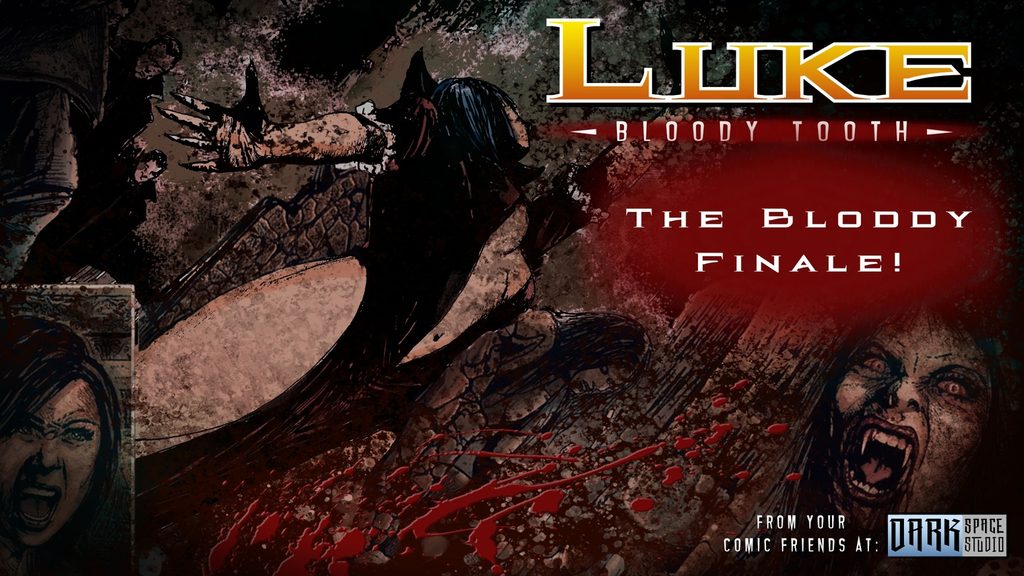
Todd Rayner: I’m Todd Rayner, I am the founder of Dark Space Studio which is my creator owned universe I’ve made and I am a writer, artist, inker, colorist and publisher and I basically just work on my own comics and publish them.
J: So what got you into making comics?
T: Well I was always an artist as a kid and ended up often drawing stuff. In the late ’80s the GI Joe comic was the first comic I started reading actually and then it just blossomed into the Todd McFarlane ’90s boom. Image happened, and that drew me in there with the new comic book art coming out. All the different covers lining up the comic store shelves look so different from everything else I had seen growing up. I ended up drawing what I saw and they say imitation is the greatest form of flattery, and I was just really drawing a lot of what I saw with the Image guys and what they were doing, panels, layouts and all that. Around 2010ish, I went to college and started doing independent comic work, and all that helped me develop the skills I needed to publish my own comics.
J: How long have you been working on comics?
T: About 16 years total now. I did some coloring for another writer first, then I decided to publish Icepick, that was 2016. Having a full time job, art was always a back burner thing for a while for me.
J: Are you a Full time artist or something you do on the side currently?
T: The short answer is I am now. I am working as a full time artist, and working on the next story after Luke is done. I do writing, art, and coloring, as well as being open for commissions if people are interested.
J: Who are your influences? Who was it that helped you pick up a pen and pencil to start?
T: The list in long, I could go back to Jack Kirby and the other greats. But Jim Lee and Todd McFarlane are the big two, along with the other wave of Image artists coming up in the 90s. Sam Keith was a huge, huge influence, his art style was so unique. It was a lot of his art style, but also how I do panel layouts has that influence from Sam Keith. It wasn’t traditional squares and rectangles, he had characters pop out of the panels and it was this fun, 70s kinda era of interior designs. For me, it was panel layouts from Sam. But art style wise Jim Lee and Todd were the big ones. Also Michael Turner, he was a big one that I have to mention.
J: As you entered the comic world;
- What did you see that you loved,
- What didn’t you like?
- What would you change?
T: 1. I love the visual storytelling of comics. I’ve always loved that even as a kid it was always a visual thing to draw what you see. That’s why I liked film so much, when done correctly film is a very visual thing and the visuals are what I always loved. I did start gravitating towards the story element, and you start reading a good story and that keeps you going with that story or idea.
- I think the financial side is one of the hardest thing to overcome. I think that I hate, which is the one thing that is a love-hate relationship. You wanna make money from it, but it’s obviously a hard road to get there as well.
- What I’d change is to give a space to market and get more visibility on the indie projects and products out there. I’ve said this before and I’ll say it again, I think the independent comics have some of the best stories and the best artwork out there, and it’s important to showcase that.
J: Why horror? What does the horror genre mean to you? What are some of your favorite movies in that realm?
T: That speaking my love language right there cuz sci-fi and horror are my two favorite genres. A lot of them they go hand in hand. Take Friday the 13th for example, it starts off as a typical slasher and then Jason turns into a supernatural thing so it’s kind of sci-fi horror almost. The first Alien, even though it’s sci-fi, it has a great horror element. Halloween, Friday the 13th, Hellraiser, there’s a lot of really really good stories out there and a lot of good horror. Even the super low budget B movies, they are still a lot of fun.
J:Sci-fi and horror can definitely go in hand in hand, Sci-Hor if you will. See you mentioned Alien, that’s a classic example, and I could put Terminator into that same category. Many would think straight sci-fi, but it definitely has horror elements as well.
A lot of older horror was done only in black and white. Do you feel this black and white truly captures the horror element or do you find full color to be a better representation of the horror books?
T: That’s a tough one and it really depends on the art to me. Film I like both. Black Sunday, the original Nosferatu, black and white. For me I like the darker, grittier tones and if you’re doing comics, the art has to stand on its own. It’s very tricky to do black and white artwork without over-rendering it and allowing each thing in the panel to be seen and separated. You really have to think about light sources in the whole contrast of what’s going on in that specific image. I prefer color, because it can accentuate a lot of the things that the black and white art cannot do but I think it really depends on the art itself.
J: For new books, things released in the last few years, what are some of your favorite titles that have come out?
T: In the last ten years I haven’t really bought many mainstream books. I did grab the new witchblade and darkness reboots, to give them a chance. That was a lot of the stuff I read a lot back in the day so wanted to follow those along for a few issues. I also picked up a new issue of GI Joe. It’s just different now, the characters have changed. Snake eyes talks now? I don’t remember that haha. I do pick up some Lady Death issues now and then as well, but mostly all indie books.
J: Do you have any advice for others looking to get into Comics themselves whether writing, drawing or otherwise?
T: Like Nike says, just do it. I like to talk to people about my process and what I’ve been doing and my struggles because there are going to be struggles. Even though the financial burden can be overwhelming or seem like a mountain to climb, you just take it one step at a time and by doing that it allows you to get that project done by taking your time and putting out the best thing you’ve done. Keep working at it keep going, there’s so many books out there and tutorials to learn how to ink color or write. You can self teach yourself so don’t feel like you’re ever not good enough keep plugging away and you’ll eventually achieve that.
J: Did you have any shout-outs or thank yous you’d like to conclude with?
T: Anyone that’s backed my Kickstarter and anybody that’s listening out there. All the supporters and fans that have supported me over the years, they are all appreciated. Thank you!
J: Well thank you Todd. I appreciate all your answers and taking the time to chat a little about what it is you do. Take care and have a good one.